
Latest News
The off-grid homesteading
Blog
Welcome to our blog!
Lessons learned on the journey toward independence
In our blog is a wealth of knowledge that we've accumulated over many years of off-grid living, as well as the lessons we've learned through trial and error. Our experience in the School of Hard Knocks has taught us valuable lessons that we are excited to share with you. In addition to our own expertise, we've also hand-selected a group of guest contributors who are experts in their respective fields. Their contributions provide even more valuable insights into homesteading, off-grid living, and emergency preparedness. We hope you enjoy learning from their knowledge and experience as much as we have!
Blog Categories
Off-Grid Power
Electricity is the kingpin in modern homes. Without it, many essential systems can't function. Learn how to make your own power with solar, micro hydro, and other sources.
Growing Food
Learn to grow your own food with tips on starting a homestead garden, including vegetable gardens, fruit orchards, small fruits, composting, and more in this section.
Storing Food
Learn to preserve and store your own food with off grid kitchen tips, recipes, and info about canning, dehydrating, and other food preservation related topics in this section.
Water
Most water systems are completely dependent on the power company. Learn how to make yours as independent as possible so your family has a reliable source of water.
Safety
Prevention and preparation are key to ensuring safety, covering physical security, home fire protection, wildland fire preparedness, and more in this section.
Communication
Communications is an often overlooked part of preparedness and homesteading. Learn how to stay in touch while living in a remote location as well as during emergencies.
most recent posts
Water System Example #3 - Using a Ramp Pump
Example: There is a water source with at least 5 gallons per minute (could be less, depending on the situation.)of flow. But this water source is below the building site (not further than 150-200 feet of elevation—possibly even further). The water source also has at...
Water System Example #4 - Using a Gasoline Powered or DC Water Pump
Example: This situation is identical to Example #3 except the water source does not have at least 5 feet of fall. However there are two different solutions for this example. Solution 1: Unfortunately, there is no energy-free method of working with this situation. But...
Water System Example #5 - Dealing with Wells
Example: The water source for the property is a well with a maximum static water level of 20 feet (Solution #1 ), 85 feet (Solution #2), 200 feet (Solutions #3 & #4), 300 feet (Solution #5), and 600 feet (Solution #6). Probably the most common water source one...
Water System Example #6 - Cistern Is Not Above the House
Example: This example covers what to do with any of the previous situations when it is not possible to have a cistern above your building site. This applies to all the previous examples, with the exception of wells. Refer to Water System Example #5 for that. Solution...
Water System Example #7 - Spring & Creek Combo
Example: There is a spring present on the property that is less than 40 vertical feet above the building site, level with it, or perhaps even below it. There is also a creek with at least 5-10 (bare minimum) gallons per minute flow that falls at least 3-5 vertical...
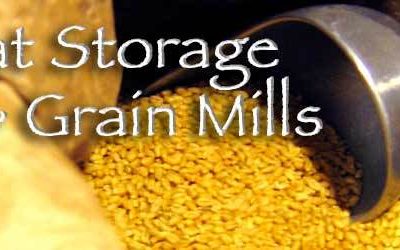
Wheat Storage & Grain Mills
Storing wheat and dry bulk food items is an important part of homesteading. Just think what happened 100 years ago when the farmers harvested their crops of grain. You would have likely gone and purchased what you needed to get you through till the next wheat harvest....