
Latest News
The off-grid homesteading
Blog
Welcome to our blog!
Lessons learned on the journey toward independence
In our blog is a wealth of knowledge that we've accumulated over many years of off-grid living, as well as the lessons we've learned through trial and error. Our experience in the School of Hard Knocks has taught us valuable lessons that we are excited to share with you. In addition to our own expertise, we've also hand-selected a group of guest contributors who are experts in their respective fields. Their contributions provide even more valuable insights into homesteading, off-grid living, and emergency preparedness. We hope you enjoy learning from their knowledge and experience as much as we have!
Blog Categories
Off-Grid Power
Electricity is the kingpin in modern homes. Without it, many essential systems can't function. Learn how to make your own power with solar, micro hydro, and other sources.
Growing Food
Learn to grow your own food with tips on starting a homestead garden, including vegetable gardens, fruit orchards, small fruits, composting, and more in this section.
Storing Food
Learn to preserve and store your own food with off grid kitchen tips, recipes, and info about canning, dehydrating, and other food preservation related topics in this section.
Water
Most water systems are completely dependent on the power company. Learn how to make yours as independent as possible so your family has a reliable source of water.
Safety
Prevention and preparation are key to ensuring safety, covering physical security, home fire protection, wildland fire preparedness, and more in this section.
Communication
Communications is an often overlooked part of preparedness and homesteading. Learn how to stay in touch while living in a remote location as well as during emergencies.
most recent posts
Your Homestead Water System 101
Water Usage How much water does the typical family use? Probably a lot more than they need to. What sort of things do you need to consider for your homestead water system? Lets start with how much water you need. Here are some estimates of the typical water usage:...
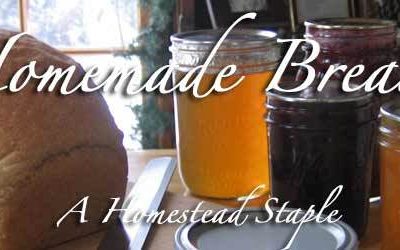
Homemade Bread - A Homestead Staple
Nothing says 'Homestead' quite like a couple loaves of homemade bread baking in the oven. Know what I mean? Pull those loaves out of the oven, grab the bread knife and slice while you watch the steam rising. So many people struggle to make a good loaf of bread. So I...
Developing a Springhead
Springs are an excellent source for some of the finest water systems available. But they can also have their drawbacks. Many springs are seasonal, meaning they disappear during dry times of year. Some are normally year-round but may not be reliable during droughts....
Deep Well Hand Pumps
This article is for those of you who get your water from a well, which brings the unique challenge of pulling water up from a deep and skinny hole in the ground. Doing that can become very interesting if you do not have electricity. We try to focus on good,...
Ram Pumps
This truly revolutionary pump could be your ticket to a completely independent water system that is not reliant on electricity or fuel. A ram pump uses the pressure of gravity on water to pump the water uphill. It generally needs a water source with at least 5 feet...
Different Types of Pumps
Pumps do not like to pull (or suction). They are much more effective at pushing. For this reason, we have two main categories of pumps--submersible and surface (along with the numerous subcategories for each). Because the water level in wells is often greater than...